PPIA Australia
Transforming a fragmented national student portal into a more structured, credible, and culturally resonant digital home for Indonesian students across Australia.
Context &
Scattered Concepts
Perhimpunan Pelajar Indonesia Australia (PPIA) represents Indonesian student associations across Australia. The national website is often the first point of contact for students exploring scholarships, state chapters, testimonials, events, and life in Australia.
These visuals represent early ideations that didn't make it to production. The initial ideas were scattered, resulting in a layout that felt disjointed and lacked hierarchy—what we jokingly referred to as "scattered flexbox everywhere."
The previous site felt cluttered, text-heavy, and inconsistent. Broken links, weak hierarchy, and a lack of cultural identity made the platform harder to trust and harder to navigate, especially for students trying to understand a nationwide network.
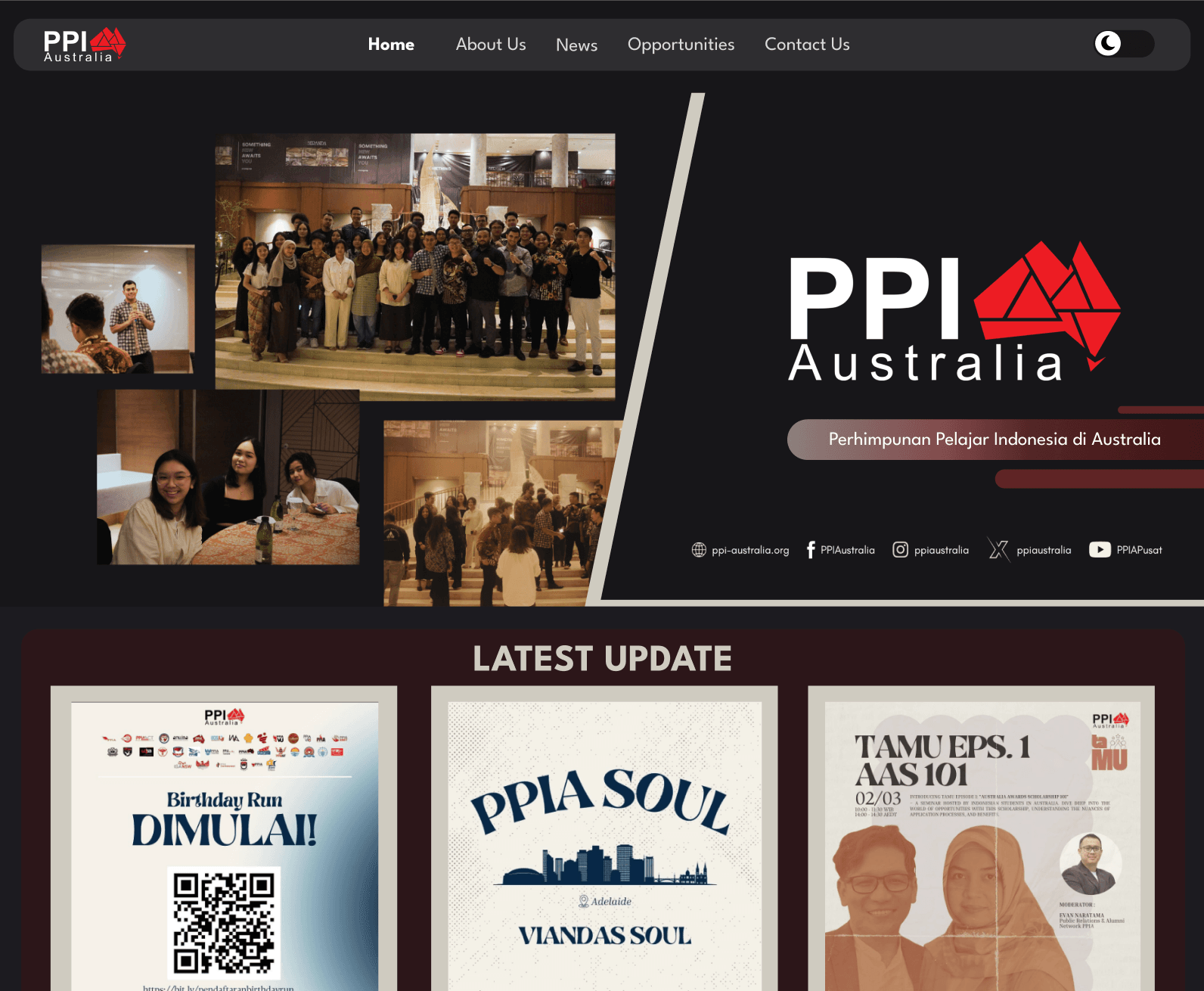
Concept V1
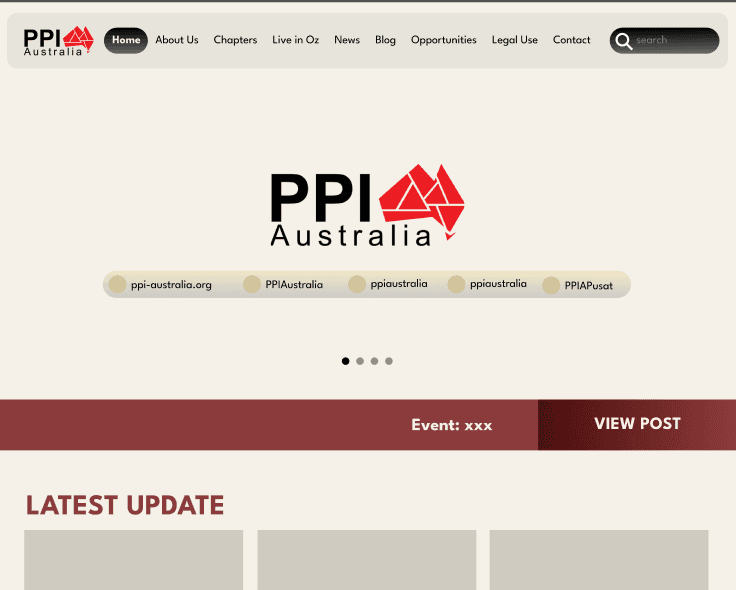
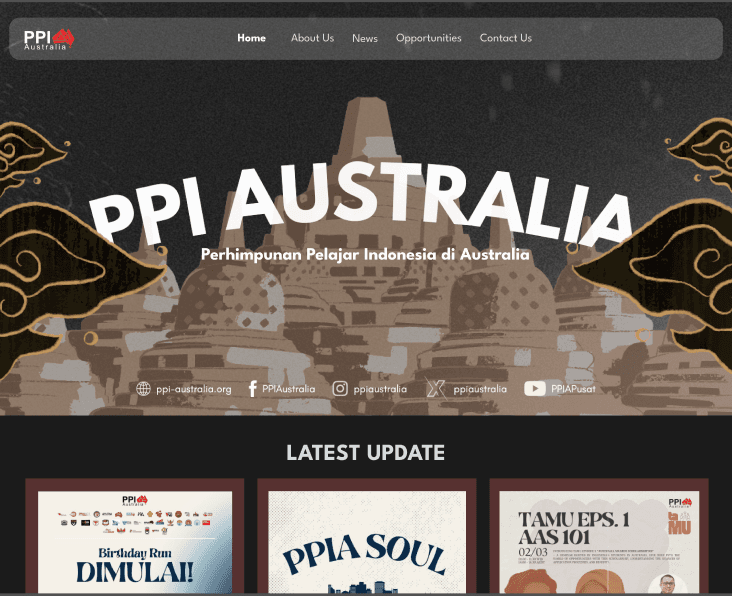
The Core Problem
Why the old site no longer served a national audience
Information Overload
The old template stacked dense text and inconsistent modules without clear hierarchy, making important national resources feel buried.
Low Trust
Broken links, visual inconsistency, and weak readability reduced credibility for students, sponsors, and institutional stakeholders.
No Sense of Scale
Branches felt like isolated names on a page instead of part of a connected national network spanning Australia.
Before & After
Direct proof of visual clarity and hierarchy improvements
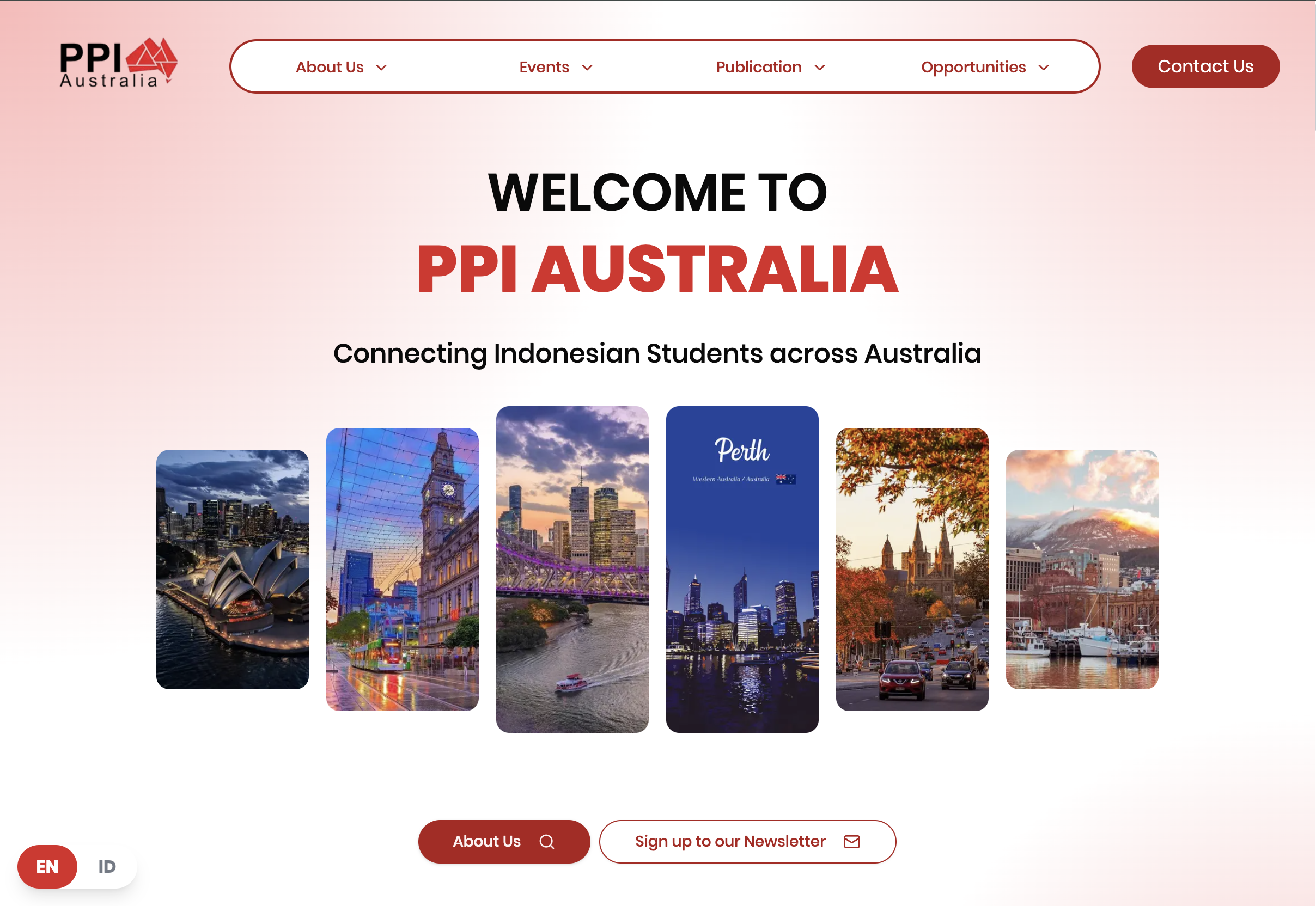
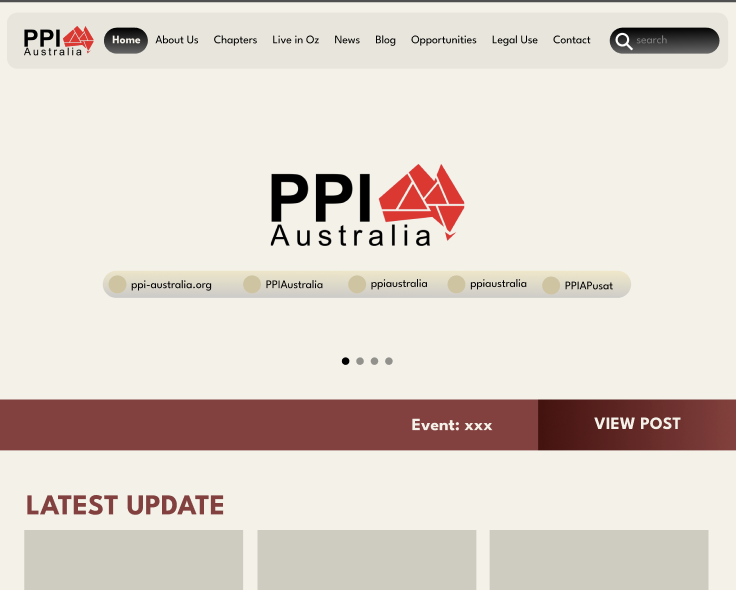
A strategy shaped by structure, identity, and national connection.
We shifted the platform from a cluttered noticeboard into a clearer, warmer, and more experiential national system.
Clearer Hierarchy
Restructured 20+ pages into a more legible information architecture, surfacing scholarships, chapters, and key national resources more clearly.
Professional Warmth
Balanced a more formal national tone with student-friendly warmth through cleaner layouts, softer spacing, and a refined red-white palette.
National Storytelling
Designed the experience to feel like one connected Australian network rather than a loose set of branch pages.
Interactive Depth
Introduced 3D interaction as a way to make branch exploration more meaningful and memorable within a stricter institutional project.
Making branches feel alive in 3D
Because a list of branches alone felt administrative and flat, I explored 3D interactions to turn each region into a more explorable part of the national story.
Placeholder for the New South Wales branch interaction or landmark-based model.
Placeholder for the Victoria branch interaction or region-specific 3D storytelling element.
Placeholder for the Queensland branch interaction, such as a symbolic regional scene.
Key Design Decisions
Institutional governance design
The redesigned homepage prioritised welcome messaging, chapter visibility, and trust-building content so students could understand PPIA faster at a national level.
Red-White Visual Identity
Moved away from scattered dark and neon colours toward a clearer Indonesian red-white system that felt more official, unified, and readable.
3D Branch Exploration
Used 3D interaction to give branches more narrative presence, helping the national site feel less like a directory and more like a connected ecosystem.
Future Opportunities for the Community
Led reviews, handoffs, and coordination across designers and developers in different states and time zones to keep the system consistent as it scaled.
Outcomes at a Glance
National clarity, stronger identity, better engagement
21k+
Requests handled in a day
20+
University branches represented
8
Regions Represented
1st
interactive 3D feature introduced
Leading a design system across states, time zones, and contributors.
This project wasn't just interface design. It was also a coordination challenge across a large national student team.
What I led
• Task delegation across 4 designers within a larger 20+ member team
• Design reviews and handoffs with developers
• Alignment with media and education divisions for content integration
• Weekly scheduling across different Australian states
How I worked
• 1-on-1 check-ins with developers to clarify design intent
• Stronger consistency through repeated visual reviews
• Early alignment so the team could enter development sooner
• Supportive communication to build accountability and trust
From a fragmented national portal
to a clearer digital home.
This project taught me that large-scale, information-heavy systems can still feel human. I learned how to balance formal credibility with student warmth, lead across different states, and use 3D interaction as a bridge for connection rather than decoration.